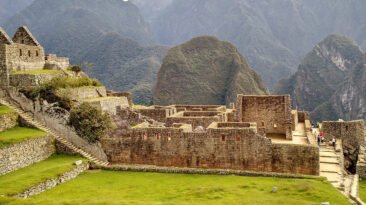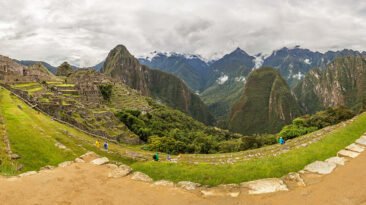
100 years ago, an intrepid American explorer ascended to the top of a mountain and found the pinnacle of our civilization, subsequently announcing this discovery to the entire world. Today, this treasure, shrouded in the depths of a cloud forest, still amazes the entire human race on account of the perfection of its buildings of polished stone and the perfect harmony it enjoys with its surroundings. The fact of the matter is that Machu Picchu is the incarnation of the highest level of cultural development that began more than 10,000 years ago and that the Incas harnessed in order to forge, during a relatively short Golden Age, their vast empire that encompassed territory from five of South America's modern states.
In addition to being our main cultural heritage, Machu Picchu is also a world class tourist attraction and a remarkable genetic reserve since the Historic Sanctuary boasts great biodiversity and protects incredible plants and animals within its forests.
Machu Picchu was built in the middle of the 15th century at the command of Pachacutec, ninth ruler of the Tahuantinsuyo and the one responsible for expanding it into what we call the Incan Empire. He was just twenty years old when he ascended the throne of his father, Viracocha, after he led the Incan armies in their defeat of the warlike Chancas. Wearing a colorful headdress, Pachacutec began his long reign that transformed the Andean world and built Cusco into the amazing city that left the Spanish Conquistadores stupefied.
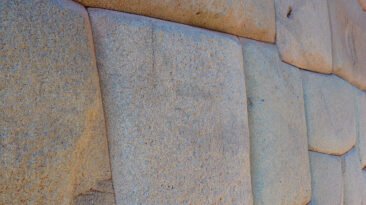
We cannot image the incredible effort it took to construct Machu Picchu. Its chosen location alone presented a daunting challenge for the Incan engineers: in a spot with annual elevated levels of precipitation and at the top of a jagged mountain surrounded by gorges that take one's breath away. To accomplish this amazing feat, the builders had to remove massive quantities of stone and dirt and to construct enormous terraces, canals, foundations that were several meters deep, and monolithic walls of remarkable polished stones. Within these structures lived the Emperor and his court.
One century after being brought to the world's attention, Machu Picchu maintains its enigmatic status. Was it a royal retreat for the Emperor Pachacutec, a mausoleum for past kings, an observatory, an attempt to increase farmland, a temple to the sun? While the city's true purpose remains shrouded in mystery, archeologists have uncovered plenty of artifacts through which we know a little more about the Inca's complex society and world view.
It is our wish to pay tribute to this Wonder of the World through this website that includes a never before seen virtual tour of Machu Picchu, a link to download free of charge the most recent book written by Walter Wust, Canto de Piedra, which contains hundreds of original photos, some of which are plates that are nearly 100 years old and that were taken by the famous photographer Martin Chambi, as well as dozens of articles from world renowned scholars…everything wrapped in the modern packaging of social networking in order to make it easier to fulfill our duty of sharing this treasure with the entire world.
So we say, “Welcome!”